
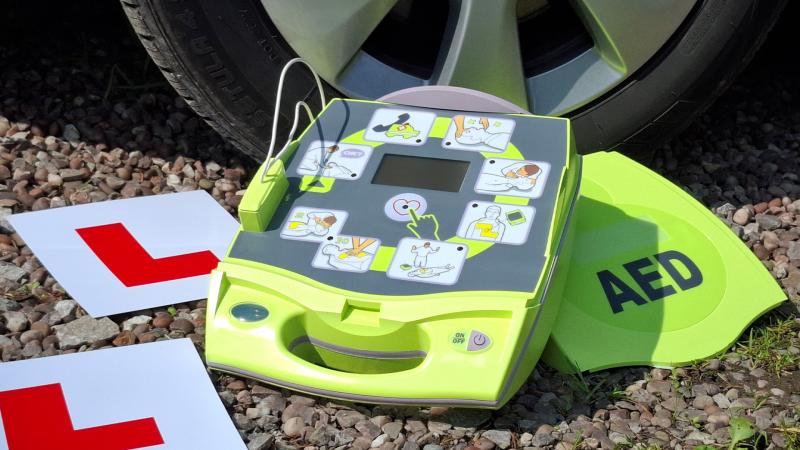
The challenge
Every year, approximately 40,000 people across the UK experience an out of hospital cardiac arrest where resuscitation is attempted. Thanks to bystanders, ambulance teams and clinicians, more people are surviving, but far too many still feel unsure or unprepared when someone experiences a cardiac arrest.
Across many European countries, CPR training is a routine part of learning to drive. It ensures that anyone who gets behind the wheel also has the basic skills needed to save a life in an emergency. In the UK, this is not yet the case.
Progress so far
The UK Government has announced that driving theory tests will include new CPR and defibrillator questions from 2026. This is welcome progress, but knowledge alone is not enough. Without practical training, new drivers will not gain the confidence or ability to act when it matters most.
There is a clear opportunity to go further.
A clear opportunity to save lives
Resuscitation Council UK provides Lifesaver, a free, interactive digital CPR and defibrillator awareness training tool that meets national standards. Lifesaver takes around an hour to complete and gives learners the essential skills they need to recognise cardiac arrest, perform CPR and understand how to use a defibrillator.
By integrating CPR training into the driving licence process, the UK could rapidly increase CPR knowledge across the population and ensure that every new driver is prepared to act in an emergency.
We are calling for CPR training to be included as part of the practical driving test across all UK nations. This would be a simple, scalable and cost effective way to strengthen the nation’s emergency response and improve survival rates.